Coral reefs are often called the “rainforests of the sea” because of the extraordinary biodiversity they support. They provide shelter, feeding grounds, spawning areas, and nursery habitats for numerous marine species. Coral reefs also help protect coastlines by reducing wave energy and supporting the productivity of coastal fisheries.
Despite their ecological importance, coral reefs remain highly vulnerable to rising sea temperatures, pollution, sedimentation, destructive fishing practices, and other human activities. Understanding which coral species are present is therefore an essential first step in developing effective conservation strategies.
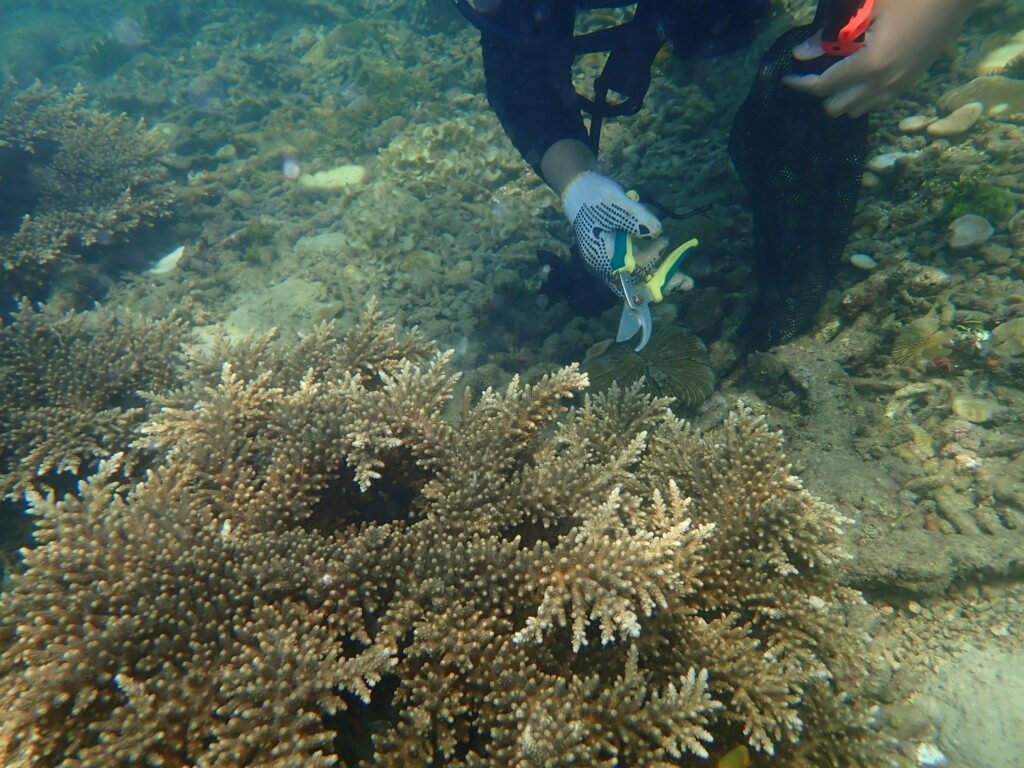
Field surveys were conducted at three observation stations across the Cuku Nyinyi coastal area. Coral samples were collected through direct underwater surveys and cleaned using a bleaching process, allowing researchers to examine their skeletal structures and morphological characteristics in detail.
Species identification was carried out using the Coral Finder identification guide and Jenis-Jenis Karang di Indonesia, a reference book on Indonesian coral species. Reef conditions were also documented using the Underwater Photo Transect, or UPT, method, which uses systematic underwater photography to assess benthic conditions and coral reef cover.
The study documented a relatively high diversity of hard corals. A total of 54 coral samples were identified, representing 11 different genera.
The most frequently recorded genus was Porites, with 17 samples, followed by Fungia with 10 samples and Acropora with 9 samples. Other genera recorded during the survey included Millepora, Pavona, Psammocora, Montipora, Goniastrea, Echinophyllia, Pectinia, and Sandalolitha.
The distribution of these coral groups varied between observation stations, indicating that each site has different environmental conditions, substrates, water movement, and habitat characteristics.The dominance of Porites may reflect the genus’s ability to tolerate a wide range of environmental conditions. Meanwhile, the presence of Acropora is particularly important because this group is generally more sensitive to changes in water quality and environmental stress.
The coexistence of tolerant and more sensitive coral groups suggests that parts of Cuku Nyinyi still provide suitable habitats for diverse coral communities.
Discovering the Coral Diversity of Cuku Nyinyi
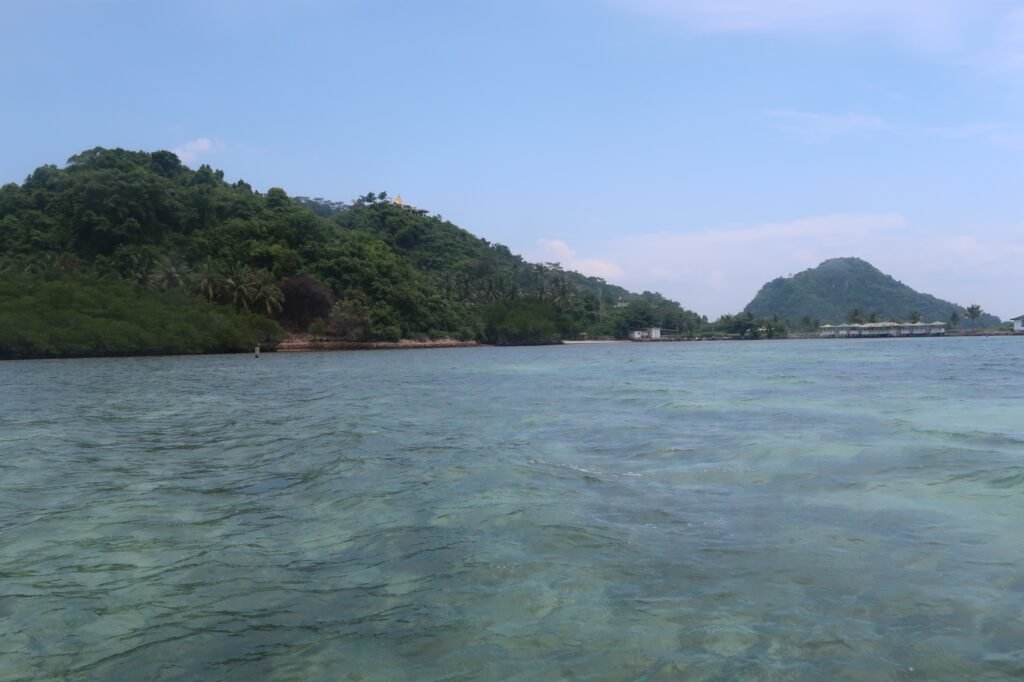
Cuku Nyinyi, located in Pesawaran Regency, Lampung, is widely known for its green mangrove landscape and coastal ecotourism trails. Yet beyond the mangrove forest, beneath the calm waters of Lampung Bay, lies another ecosystem that remains largely unseen a diverse coral reef habitat with significant ecological value.
Although the area has become increasingly recognised as a mangrove tourism destination, little is known about the coral communities living only a short distance offshore. Scientific information on coral species composition, distribution, and conservation status is still limited.A recent study sought to uncover this hidden biodiversity by identifying hard coral species, documenting their distribution, and assessing their conservation status. The findings provide valuable baseline information for future marine conservation and sustainable ecotourism development in Cuku Nyinyi.
Coral Conservation within a Connected Coastal Ecosystem
The study also assessed the conservation status of the identified coral species using the IUCN Red List of Threatened Species and the Checklist of CITES Species.
Several species were classified as Near Threatened or Vulnerable, while others were listed as Least Concern. All identified species were included in CITES Appendix II.
This designation does not necessarily mean that the species are currently threatened with extinction. However, their international trade must be regulated and monitored to prevent exploitation that could endanger their populations in the wild.
These findings show that although Cuku Nyinyi still supports considerable coral diversity, protecting its habitats remains an urgent priority.
Cuku Nyinyi is also more than a mangrove tourism destination. The area contains mangroves, seagrass beds, and coral reefs—three coastal ecosystems that are closely connected and support one another.
Mangroves help trap sediment and reduce the amount of material entering coastal waters. Seagrass beds provide feeding and nursery grounds for juvenile marine organisms. Coral reefs support complex food webs and offer shelter for a wide variety of marine species.
Together, these habitats form an interconnected coastal landscape that supports biodiversity, fisheries, shoreline protection, and local livelihoods. Protecting only one ecosystem would therefore be insufficient. Effective conservation must manage mangroves, seagrass beds, and coral reefs as one integrated ecological system.
Turning Scientific Data into Conservation Action
This research provides an important starting point for understanding the coral biodiversity of Cuku Nyinyi.Information on coral composition, distribution, habitat characteristics, and conservation status can support future monitoring, habitat protection, restoration planning, environmental education, and sustainable tourism management.
For Yayasan Rumah Konservasi Laut, conservation does not begin only with coral transplantation or reef restoration. It begins with understanding what biodiversity is present, documenting its current condition, and identifying which species and habitats require greater attention.Through continued research, community involvement, environmental education, and integrated coastal management, Cuku Nyinyi has the potential to become a conservation-based ecotourism destination.
In the future, the area could become recognised not only for the beauty of its mangrove forest, but also for the remarkable coral reef ecosystem hidden beneath its waters.